

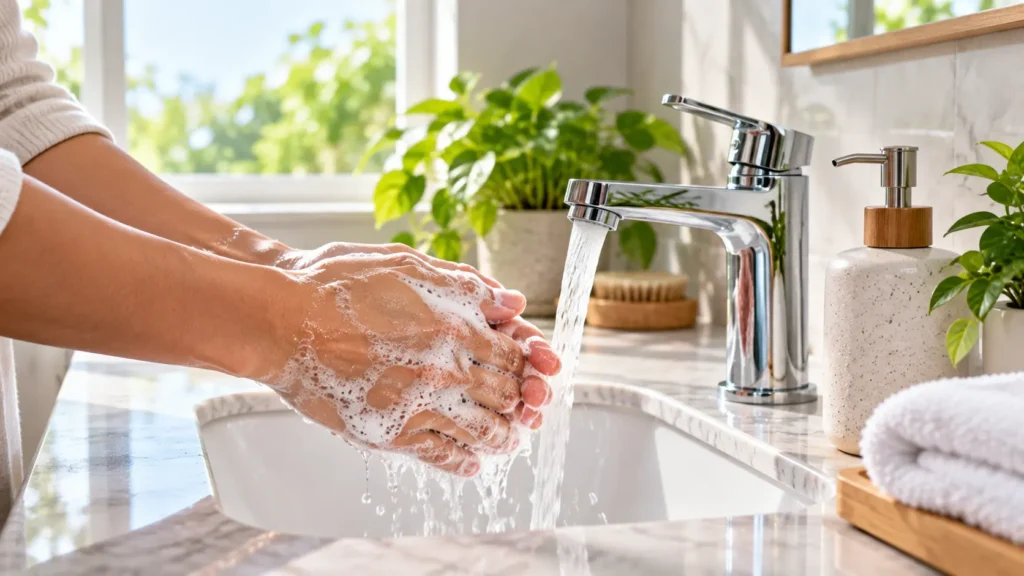
Hand hygiene is one of the simplest everyday habits that can help protect your health and reduce the spread of germs.
Your hands regularly come into contact with food, surfaces, objects, animals, and other people. Germs can transfer to your hands without being visible, and touching your eyes, nose, mouth, food, or other people afterward can help spread them.
Regular handwashing with soap and clean running water is an important part of everyday hygiene.
Why Is Hand Hygiene Important?
Good hand hygiene can help remove germs and reduce the chance of spreading infections.
According to the CDC, handwashing can help prevent respiratory and diarrheal infections and is particularly important at certain times, such as before eating, after using the toilet, and after coughing or sneezing.
Hand hygiene is also important when preparing food because germs on your hands can be transferred to food and kitchen surfaces.
When Should You Wash Your Hands?
You don’t necessarily need to wash your hands every few minutes. Instead, focus on the situations when hand hygiene is particularly important.
Wash Your Hands:
- Before, during, and after preparing food
- Before eating
- After using the toilet
- After changing a diaper or helping a child use the toilet
- After coughing, sneezing, or blowing your nose
- Before and after caring for someone who is sick
- Before and after treating a cut or wound
- After touching animals or animal waste
- After handling pet food or treats
- After touching garbage
- When your hands are visibly dirty
These are among the key situations identified by the CDC for handwashing.
How to Wash Your Hands Properly
Effective handwashing doesn’t need to be complicated.
Follow these five basic steps:
Step 1: Wet Your Hands
Use clean, running water to wet your hands.
The water can be warm or cold. Apply soap after wetting your hands.
Step 2: Apply Soap and Lather
Rub your hands together with soap.
Make sure the lather reaches:
- Your palms
- The backs of your hands
- Between your fingers
- Around your thumbs
- Under your fingernails
Step 3: Scrub Your Hands
Scrub your hands thoroughly for about 20 seconds.
Don’t focus only on your palms. Areas between your fingers, fingertips, thumbs, and around your nails can easily be missed.
Step 4: Rinse
Rinse your hands thoroughly under clean, running water.
Step 5: Dry
Dry your hands using a clean towel or an air dryer.
Drying your hands is the final step of proper handwashing.
What If Soap and Water Are Not Available?
Sometimes you may not have immediate access to soap and running water.
In those situations, an alcohol-based hand sanitizer containing at least 60% alcohol can be used.
Apply enough sanitizer to cover the surfaces of your hands and rub your hands together until they are dry.
However, soap and water remain the preferred option in many everyday situations, particularly when hands are visibly dirty or greasy.
Handwashing and Food Safety
Hand hygiene is especially important in the kitchen.
Your hands can transfer germs to food while you are preparing meals. Washing your hands before and during food preparation can help reduce the risk of spreading germs around your kitchen.
Remember to wash your hands:
- Before preparing food
- After handling raw meat, poultry, seafood, eggs, or flour
- Before eating
- After touching garbage
- After touching pets or pet food
- After coughing or sneezing
- After cleaning kitchen surfaces
Good hand hygiene should be combined with other food-safety practices, such as keeping raw and ready-to-eat foods separate and cleaning food-preparation surfaces appropriately.
Do You Need to Wash Your Hands After Using the Toilet?
Yes.
Handwashing after using the toilet is an important everyday hygiene habit. The CDC recommends washing your hands after using the bathroom, whether you are at home or elsewhere.
This is particularly important because bathroom use can expose hands to germs that can subsequently be transferred to food, surfaces, or other people.
Does Hand Sanitizer Replace Handwashing?
Not always.
Hand sanitizer can be useful when soap and water aren’t readily available, but it isn’t a complete replacement for washing with soap and water in every situation.
For example, when your hands are visibly dirty or greasy, washing with soap and water is preferred.
If you use sanitizer, choose one containing at least 60% alcohol and rub it over all surfaces of your hands until dry.
What About Wearing Gloves?
Gloves don’t eliminate the need for proper hand hygiene.
Hands can become contaminated while putting on or removing gloves, and gloves themselves can become contaminated during use. WHO notes that gloves do not replace proper hand hygiene.
If gloves are appropriate for a particular task, use them correctly and maintain good hand hygiene as well.
How Can You Make Hand Hygiene a Daily Habit?
Good habits become easier when they are connected to routines you already follow.
Try associating handwashing with specific activities:
Before meals → Wash your hands.
After using the bathroom → Wash your hands.
Before cooking → Wash your hands.
After coughing or sneezing → Clean your hands.
After handling pets → Wash your hands.
You can also keep soap easily accessible near sinks and carry an appropriate hand sanitizer when you’re away from home.
Teach Children Good Hand Hygiene
Handwashing is a habit worth learning early.
Children can be encouraged to wash their hands before eating, after using the toilet, after playing outside, and after coughing or sneezing.
CDC recommends teaching children the basic five-step process: wet, lather, scrub, rinse, and dry.
Making handwashing part of a child’s regular routine can help turn it into a lifelong hygiene habit.
Hand Hygiene and a Healthy Lifestyle
Hand hygiene is only one part of maintaining good health.
Other everyday habits can also contribute to overall wellness, including:
- Eating a balanced diet
- Staying adequately hydrated
- Getting enough sleep
- Staying physically active
- Managing everyday stress
- Maintaining good personal hygiene
For example, regular physical activity can complement other healthy lifestyle habits, while adequate daily hydration supports normal body functions.
You can learn more in our guides on physical activity, daily hydration, and stress management.
Common Handwashing Mistakes to Avoid
Even when people wash their hands regularly, they may sometimes miss important areas.
Common mistakes include:
Washing Too Quickly
Rushing through handwashing may mean some areas don’t receive enough attention.
Forgetting Your Thumbs
Thumbs can easily be missed when rubbing your hands together.
Ignoring Fingertips
Your fingertips frequently touch surfaces and your face, so don’t forget to clean them thoroughly.
Skipping Between the Fingers
Make sure soap reaches the spaces between your fingers.
Not Drying Your Hands
Dry your hands properly after rinsing.
Using Too Little Sanitizer
When using sanitizer, cover all surfaces of your hands and rub until completely dry.
Key Takeaways
- Hand hygiene is an important everyday health habit.
- Wash your hands before eating and preparing food and after using the toilet.
- Wash after coughing, sneezing, handling garbage, or touching animals.
- Use soap and clean running water whenever available.
- Scrub all parts of your hands for about 20 seconds.
- Dry your hands after washing.
- When soap and water aren’t available, use hand sanitizer containing at least 60% alcohol.
- Hand sanitizer does not completely replace handwashing in every situation.
- Good hand hygiene is particularly important when preparing food and caring for someone who is sick.
Frequently Asked Questions
How long should you wash your hands?
For everyday handwashing, the CDC recommends scrubbing with soap for about 20 seconds while covering all areas of the hands.
Is cold water okay for handwashing?
Yes. CDC guidance states that hands can be washed with clean running water that is either warm or cold.
What percentage of alcohol should hand sanitizer contain?
When soap and water aren’t available, choose an alcohol-based hand sanitizer containing at least 60% alcohol.
Should I wash my hands after touching my pet?
Yes. Washing your hands after touching animals, animal food, or animal waste is recommended as part of good hand hygiene.
Does wearing gloves mean I don’t need hand hygiene?
No. Gloves are not a replacement for proper hand hygiene.
References & Sources
The article was researched using reliable public-health resources:
- Centers for Disease Control and Prevention (CDC) — About Handwashing
CDC — About Handwashing - World Health Organization (WHO) — Washing Hands
WHO — Washing Hands - CDC — Hand Hygiene Frequently Asked Questions
CDC — Hand Hygiene FAQ - WHO/UNICEF — Guidelines on Hand Hygiene in Community Settings
WHO — Guidelines on Hand Hygiene in Community Settings
Editorial Note: These sources were used for research and information verification. Koshika AI independently writes and presents its content for general health education.
Health Disclaimer
This article is provided for general health-awareness and educational purposes only. It is not intended to replace professional medical advice, diagnosis, or treatment.
If you have concerns about an infection, illness, or other health condition, consult a qualified healthcare professional.
We share short 3D animated health videos on social media. Follow us to see them first.
This article is for general information only and is not medical advice. Please talk to a doctor about your own health. Read our disclaimer.

Written by vvk456
General health information only. Not a substitute for medical advice.