

White flakes on a dark shirt are one of those small things that can make anyone feel self-conscious. The good news is that dandruff is very common, it is not dangerous, and for most people it can be kept under control with a few simple habits. This guide explains what dandruff really is, why it keeps coming back, what is worth trying, and when it is time to see a doctor.
We often cover hair and scalp topics in our short videos, and a video can only say so much. So here is the longer, calmer version, with sources at the end.
The short answer
- Dandruff is a common scalp condition that causes flaking and sometimes itching. It is not contagious.
- It is not caused by being “dirty”. A yeast-like fungus that lives on most scalps, oily or irritated skin, and some hair products are common reasons.
- Mild dandruff often improves with regular, gentle shampooing. If not, an anti-dandruff shampoo usually helps.
- There is no one-time cure. Most people manage it, and it can come back.
- See a doctor if the scalp is red or swollen, or if there is no improvement after several weeks of proper use.
What is dandruff?
Dandruff is a condition in which the skin on the scalp flakes. Doctors describe it as a mild form of seborrheic dermatitis, a skin condition that mainly affects oily areas such as the scalp. The flakes can be white or yellowish, and they may land on your shoulders or collar. Itching is common.
Why does dandruff happen?
There is usually more than one reason. These are the most common ones:
- A scalp yeast called Malassezia. It lives on the scalp of most adults and feeds on natural oils. In some people the scalp reacts strongly to it, and this can lead to flaking.
- Oily, irritated skin. This is the seborrheic dermatitis type, with greasy-looking scales and sometimes redness.
- Sensitivity to hair products. Some shampoos, gels, dyes or sprays can irritate the scalp. Doctors call this contact dermatitis.
- Dry skin. Dry, flaky skin can cause flakes that look like dandruff. These flakes are usually smaller and drier.
- Not washing often enough. Oil and dead skin build up, and the flaking can get worse.
- Stress, hormone changes or illness. These may make flare-ups more likely.
- Other skin conditions. Psoriasis and eczema can also cause flakes that look like dandruff.
It can affect almost anyone. Studies and clinics note it is somewhat more common in men. Because causes differ from person to person, what works for a friend may not work for you.
Dandruff or dry scalp?
The two look alike, but the care is not always the same. These are rough guides only.
| Sign | Dandruff | Dry scalp |
|---|---|---|
| Flakes | Larger, white or yellowish, may look oily | Smaller and white, and dry |
| Scalp | Often oily or irritated | Often tight and dry; skin elsewhere may also be dry |
| Itching | Common | Common |
| What usually helps | Anti-dandruff shampoo | Gentler washing and moisturising |
If you are not sure which one you have, a doctor can usually tell just by looking at your scalp.
What can actually help
1. Start with regular, gentle washing
For mild dandruff, a gentle shampoo used regularly is often enough. Washing removes extra oil and loose flakes. Skipping washes because the scalp feels dry or you worry about hair fall can make dandruff worse. If you are worried about shedding, our guide on why hair falls out explains what is normal.
2. Try an anti-dandruff shampoo
If gentle washing is not enough, look for a medicated shampoo that you can buy without a prescription. Common active ingredients include:
- Zinc pyrithione
- Ketoconazole
- Selenium sulfide
- Salicylic acid
- Coal tar
Read the label and follow it, because each product has its own instructions. Some experts suggest using one shampoo for about a month before deciding whether it works. Once the dandruff improves, many people can use it less often. If a shampoo makes your scalp itch, burn or sting, stop using it and try a different one.
3. Check your hair products
If your scalp became itchy or flaky after you started a new shampoo, oil, dye or styling product, that product may be the cause. Stop using it for a couple of weeks and see what happens.
4. A little sunlight, and stress care
Some doctors say a few minutes of daily sunlight may help dandruff. Do not get sunburned. Stress can make flare-ups worse for some people, so simple habits such as regular sleep and breaks help. Our stress management guide has easy ideas. A balanced diet supports general skin and hair health, although there is no special “dandruff diet”.
A simple 4-week plan
| Week | What to do |
|---|---|
| Week 1 | Wash regularly with a gentle shampoo and rinse well. Note which hair products you use. Pause anything new or heavy. |
| Week 2 | Start one anti-dandruff shampoo. Follow the label, including how long to leave it on. |
| Week 3 | Keep using the same product. Do not switch every few days. Try not to scratch. |
| Week 4 | Check your progress. If flakes are clearly less, use the shampoo less often. If not, or if the scalp is red or sore, see a doctor. |
Common mistakes to avoid
- Scratching hard. It can break the skin and cause soreness or infection.
- Skipping shampoo. Flakes do not clear by themselves when you stop washing.
- Leaving heavy oil on the scalp for a long time. A greasy scalp can make dandruff worse for some people. If you oil your hair, wash it out properly.
- Changing remedies every few days. Most products need a few weeks to show their effect.
- Putting strong things such as lemon juice or vinegar straight on the scalp. Evidence for them is limited, and they can irritate the skin. If you want to try a home remedy, do a patch test first and stop if you feel burning.
When to see a doctor
- Dandruff has not improved after several weeks of regular anti-dandruff shampoo use.
- Your scalp is red, swollen, sore, or has crusts or oozing.
- The itching is severe or keeps you awake.
- Flaky, red patches spread to the face, eyebrows, ears or chest.
- You see thick, silvery patches, which can be a sign of another condition such as psoriasis.
- A baby has thick, crusty scalp patches. Ask a doctor before using any medicated product on a baby.
Frequently asked questions
Is dandruff contagious?
No. You cannot catch it from someone else, and sharing a comb does not cause it.
Can dandruff go away completely?
It can clear up for a while, but it often returns. Doctors usually describe it as something to manage rather than cure, so many people keep using a medicated shampoo now and then.
Does dandruff cause hair fall?
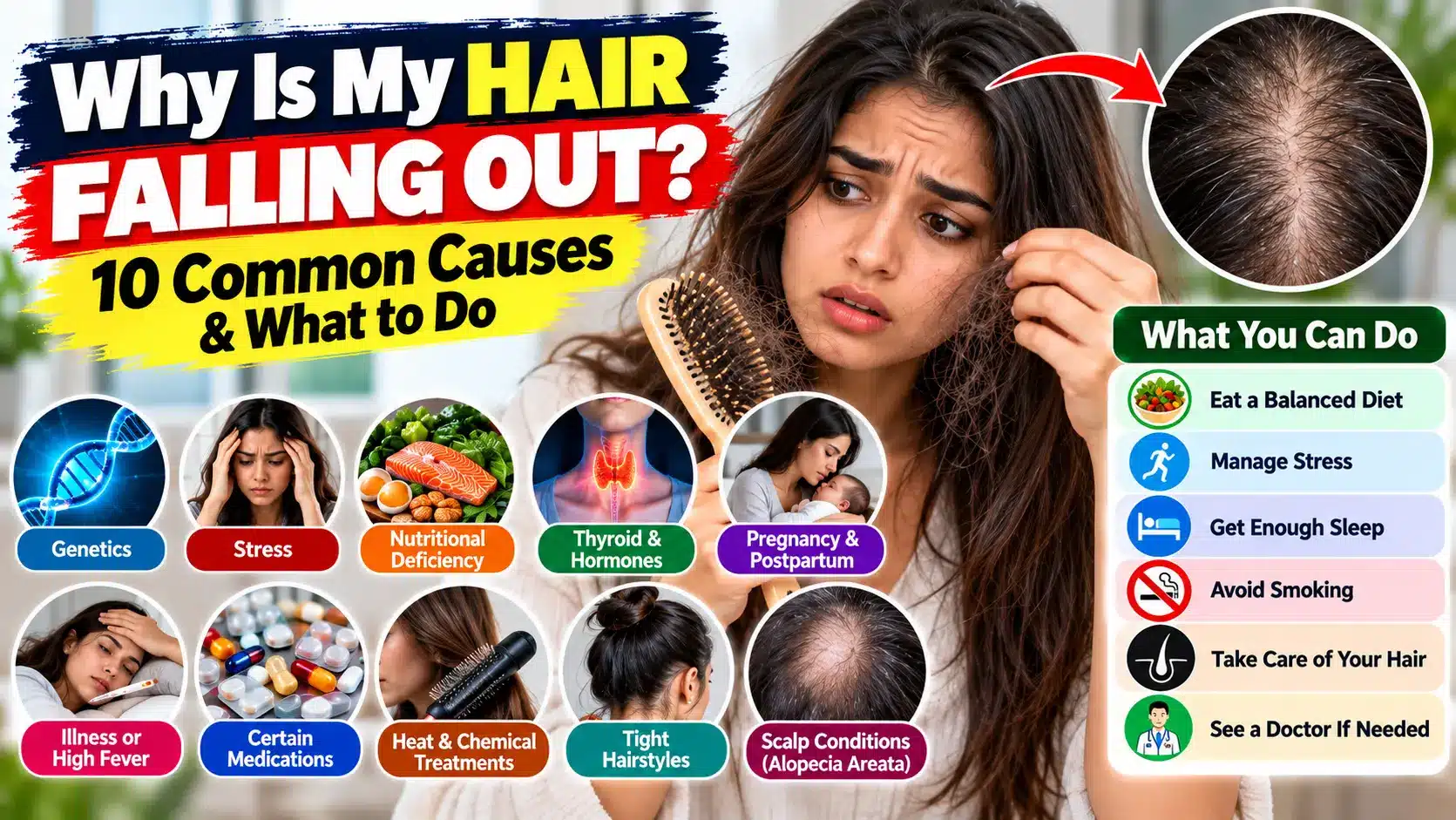
Dandruff on its own is not usually a direct cause of hair loss. But hard scratching and an inflamed scalp can add to shedding. If you notice more hair fall than usual, read our hair fall guide and consider seeing a doctor.
Can I use anti-dandruff shampoo every day?
Follow the instructions on the product. Many are used a few times a week at first and less often once the scalp improves. If your hair or scalp feels very dry, ask a pharmacist or doctor.
How we prepared this article
This article was prepared by the Koshika AI team using the sources listed below. We used AI tools to help draft it, and our editor reviewed it before publishing. It is general information, not medical advice, and it cannot replace a check-up. Please read our disclaimer.
References and sources
- Mayo Clinic: Dandruff, symptoms and causes
- Medical News Today: Dandruff, causes, treatment and prevention
We share short 3D animated health videos on social media. Follow us to see them first.
This article is for general information only and is not medical advice. Please talk to a doctor about your own health. Read our disclaimer.

Written by Koshika AI
Koshika AI is a health awareness platform that shares general health information through simple 3D animated videos and articles. Our content is for education only and is not medical advice.